



Lead Door
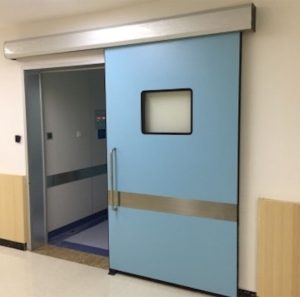
A lead door is a safety tool used in imaging rooms and environments where X-rays or radiation from ionizing materials are present. The primary purpose of using this door is to reduce the exposure and transmission of these rays to the outside environment or to protected areas. The materials used in the construction of lead doors must have the ability to absorb X-rays and ionizing radiation
Automatic Lead Door:
Automatic lead doors are one of the most popular types of lead doors due to their high operational speed and ability to prevent virus transmission, as they do not require hand contact with the door surface. One advantage of these doors is their availability during emergency and urgent situations.
Hinged Lead Door:
Hinged lead doors are among the simplest types of lead doors and are widely used in operating rooms and imaging rooms. Typically, these doors are sold with a lead frame. Hinged doors are very sturdy and are constructed using high-quality wood, MDF, durable fittings, bearing hinges, and strong frames.
Among the most important types of lead doors are sliding, automatic, and hinged lead doors.
Sliding Lead Door:
Sliding lead doors are used in many applications that require the movement of heavy doors. These doors feature a rail system that allows the door to slide relatively easily to the right and left. Sliding lead doors are constructed with a double-layer lead structure.
